Neura builds the sensor-to-kill stack for counter-UAS operations — a single integrated platform that detects, classifies, and destroys hostile drones autonomously, within rules of engagement.
Two airframes. One integrated operating architecture. Built for expendability at scale, sensor-to-shooter in under two seconds, and unit economics that hostile operators cannot outrun.
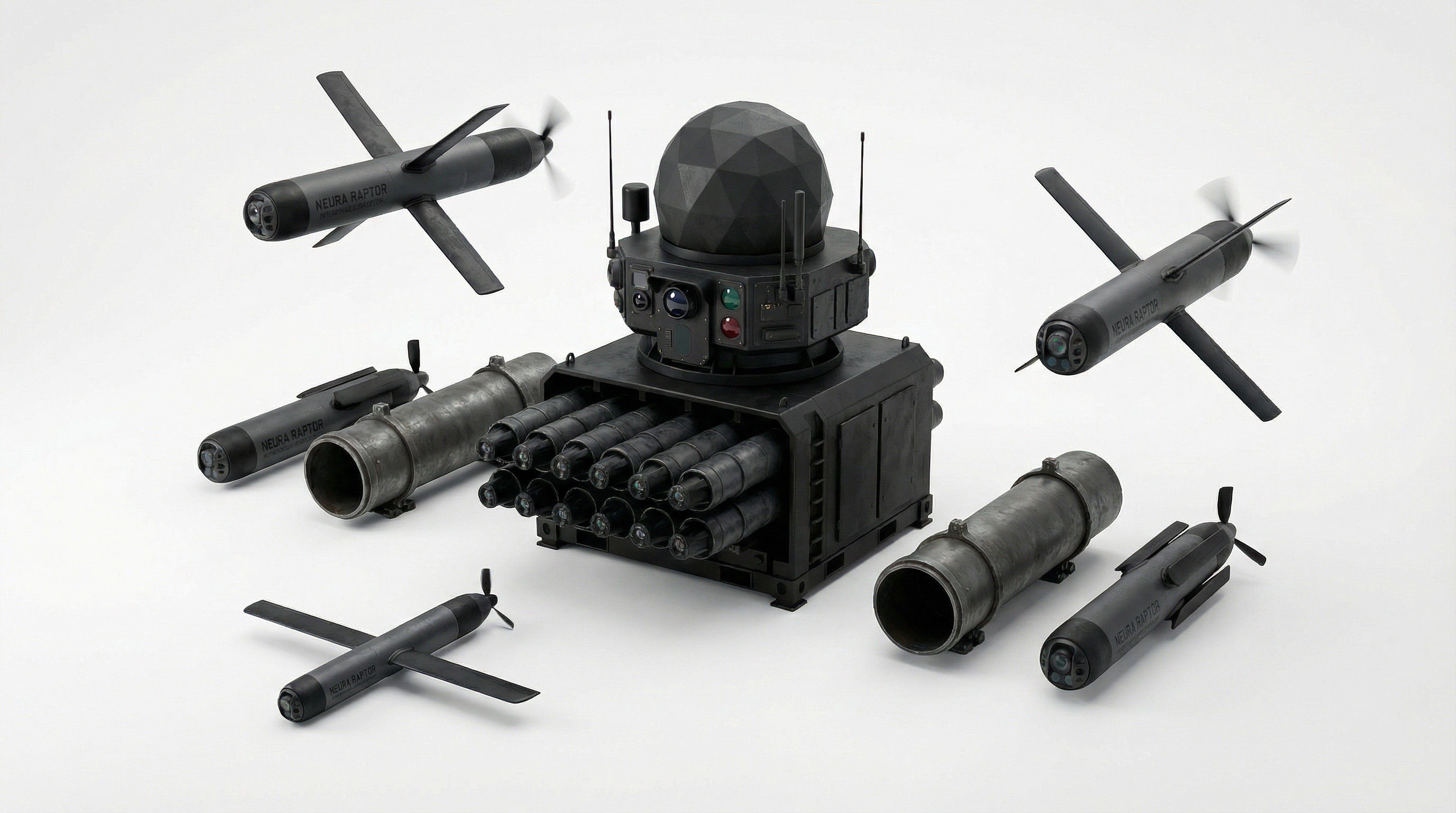
Modern conflict has broken air-defense economics. Low-cost loitering munitions saturate decision loops that depend on million-dollar interceptors — a 200-to-1 exchange ratio no force can sustain.
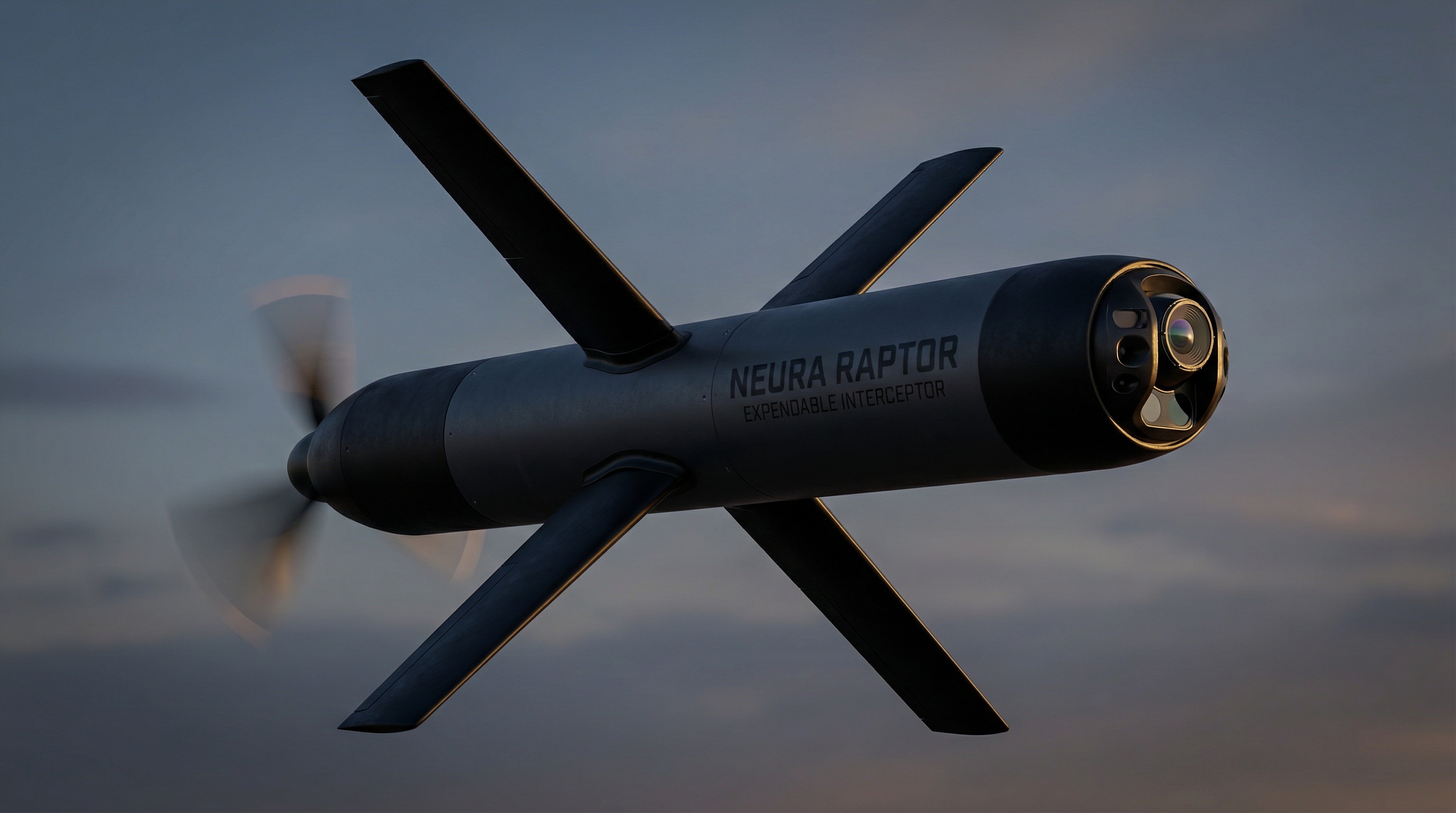
Neura Raptor ends a single inbound threat for less than one-tenth of one percent of what a Patriot costs. The math finally favors the defender.
Calc: PAC-3 unit cost vs. Raptor INT-004 / Q1 2026
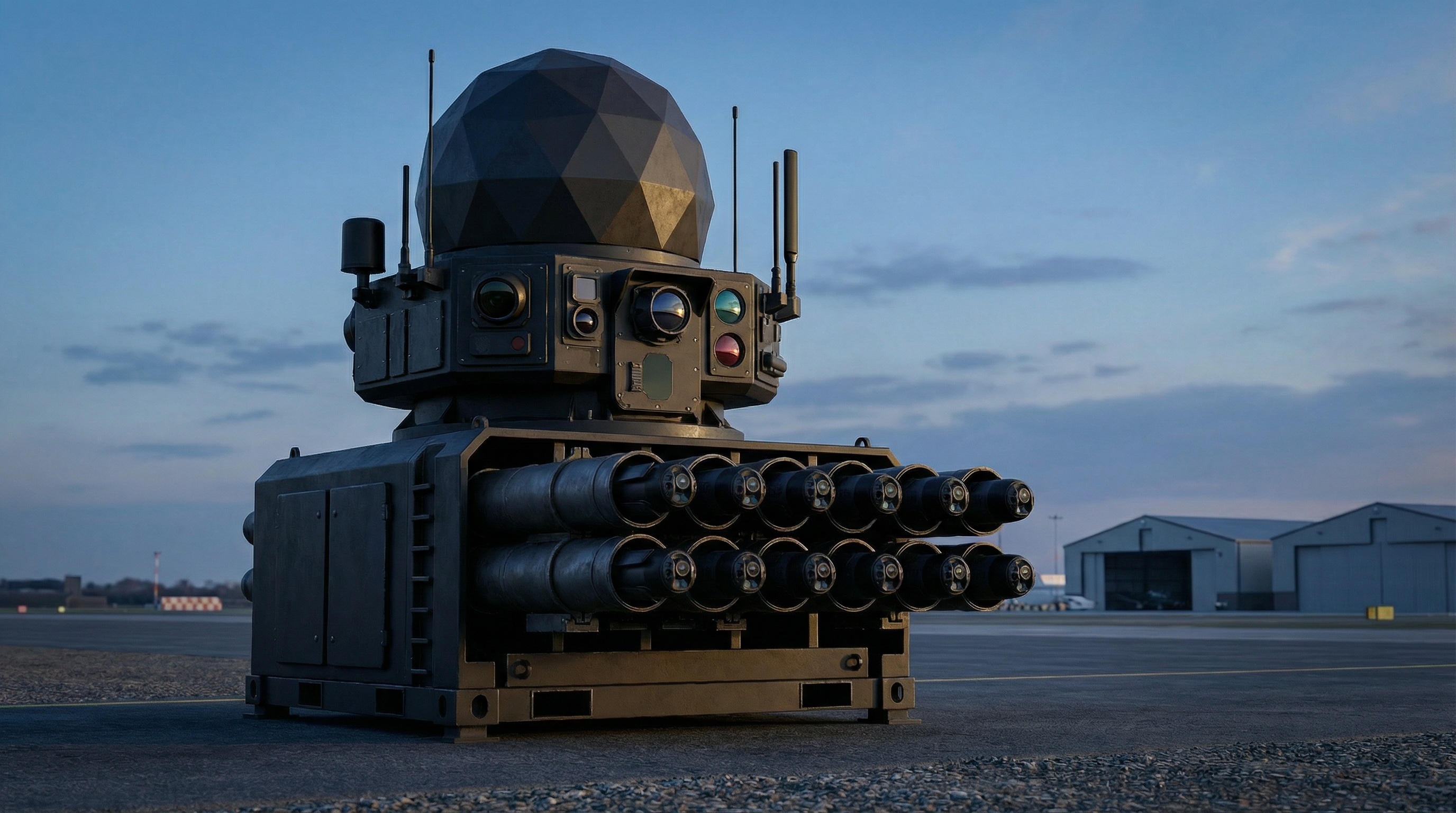
One Sentinel replaces a fragmented stack of five — sensing, tracking, C2, launch, and effectors — and closes the sense-to-decide loop at the edge. Fixed-site or vehicle-mounted. Stand up a protected perimeter in hours, not months.
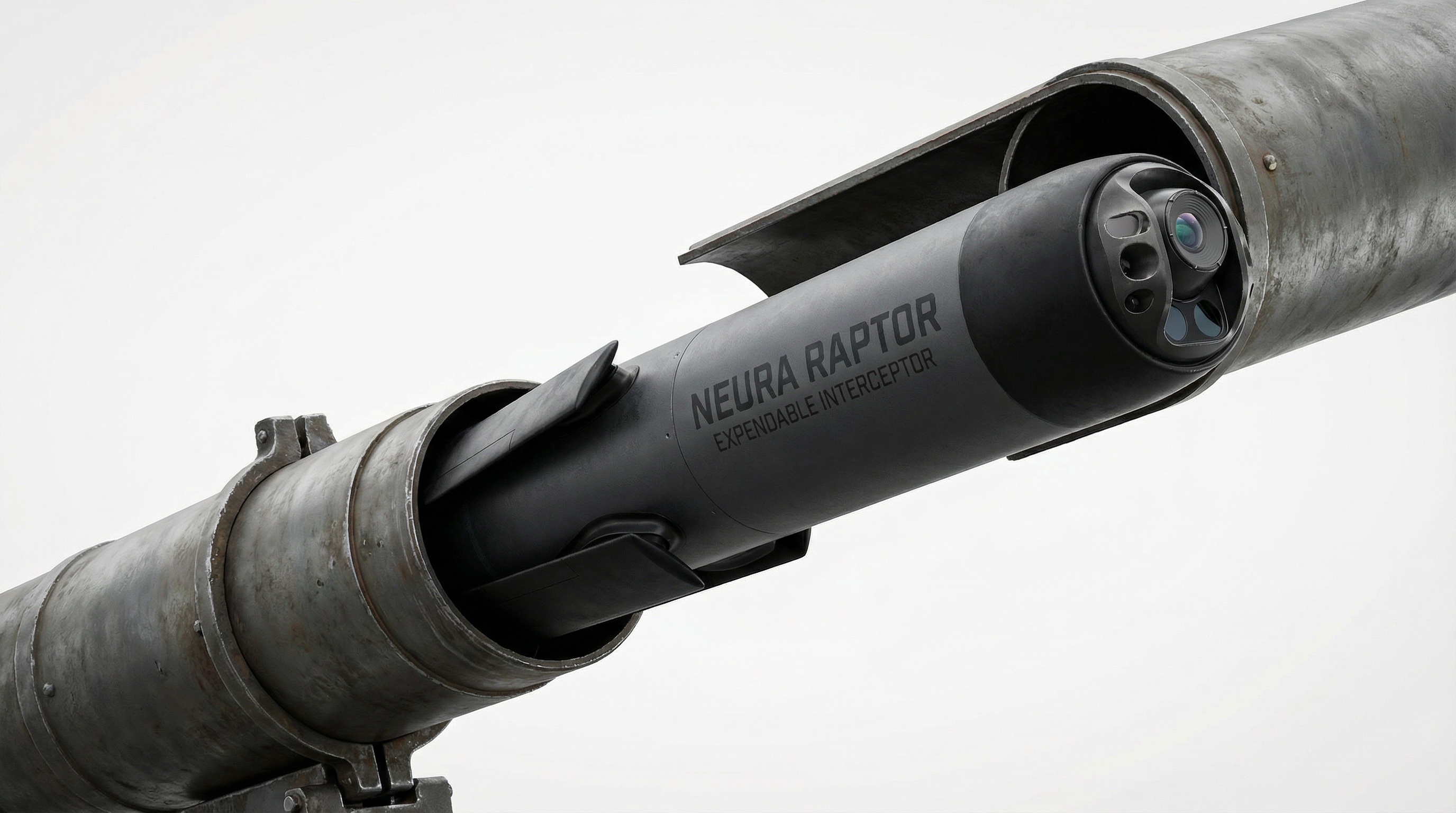
Wings, tail, and control surfaces stow inside a 110mm cell. Pneumatic eject, 40-foot unfold, electric pusher ignites post-deploy. The airframe is expendable by design — the launcher isn't.
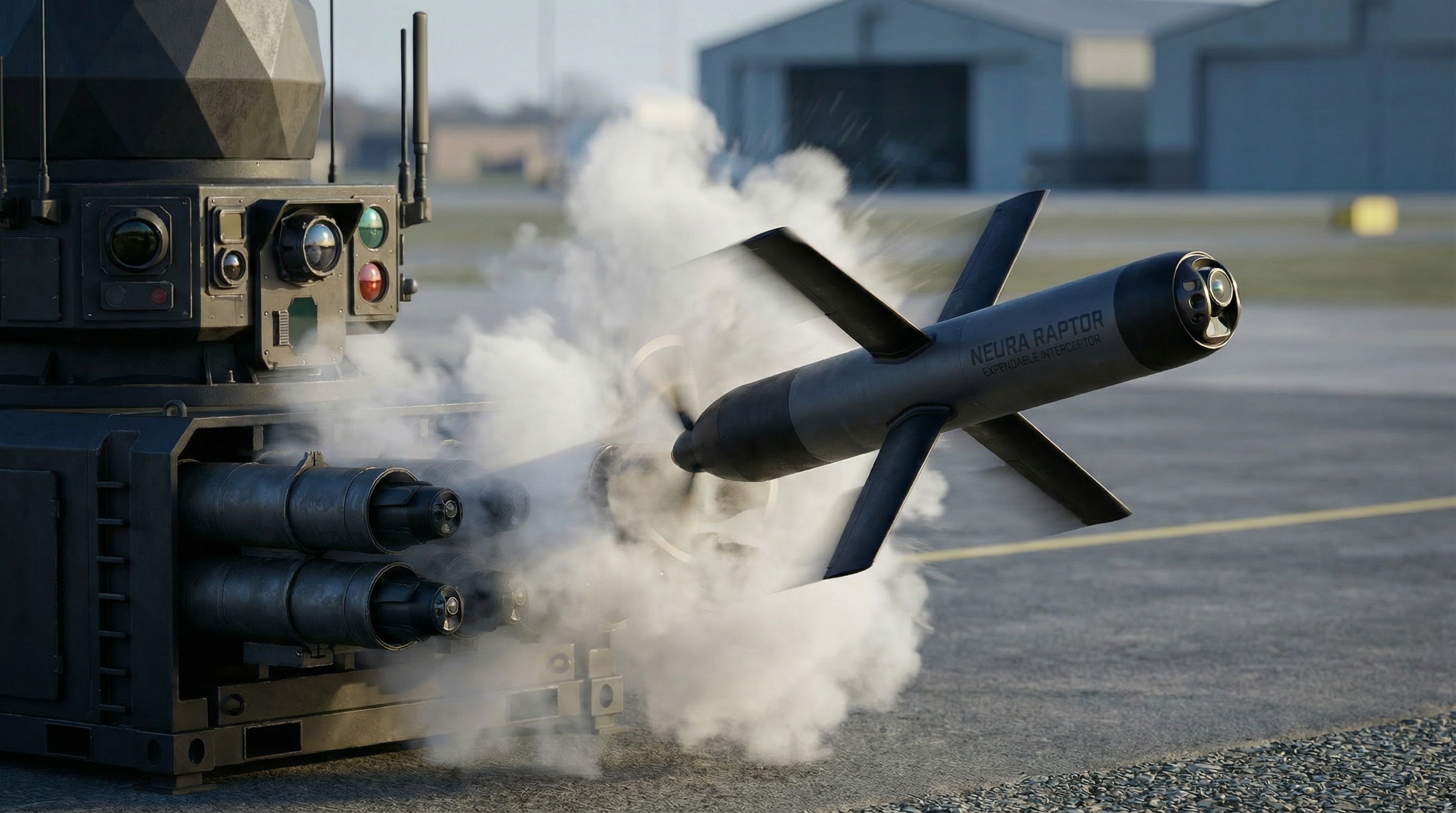
One integrated engagement loop. The Sentinel classifies the threat, allocates a tube, and the Raptor takes it from tube exit to impact — without a human in the hot path.
Multi-sensor fusion — RF, radar, EO/IR, acoustic — converges on one ground node. Target enters the Sentinel's classification model within milliseconds.
Neuromorphic compute at the edge — no cloud round-trip. Threat class assigned, tube allocated, Rules of Engagement locked.
Pneumatic tube ejection. Raptor wings deploy on exit; electric pusher fires 40 feet out. Tube-to-motor-on in under two seconds.
Terminal AI tracks the airframe through evasion. Kinetic kill confirmed on the back-end; Sentinel returns to the loop for the next inbound.
Military-first deployment. Civil infrastructure follows. International demand underwrites durable revenue across a decade of recurring defense economics.
Persistent site defense for air wings, logistics hubs, and contested-environment FOBs. Autonomous engagement within pre-defined rules of engagement.
Airports, ports, energy facilities, and federal buildings — venues where a single drone disruption carries catastrophic safety and continuity costs.
NATO and 5-Eyes partners seeking U.S.-sourced counter-UAS interoperability. White-label pathways through prime contractor channels.
Air defense was built for aircraft and ballistics. The threat changed. The math didn't. We're rebuilding both.
Analyst forecasts capture the defense-led core. Our full-segmentation model across nine counter-UAS verticals projects sustained growth through 2035 across defense, civil infrastructure, and international demand.
Global counter-UAS total addressable market, full-segmentation across defense, civil infrastructure, and international demand channels.
Full market across defense, infrastructure, and civil security today.
Decade total including international demand channels.
Compounded across nine counter-drone verticals.
Serviceable segment aligned to the Neura stack.
Global urgency, defense demand, and deployment readiness are converging. We're building the infrastructure for autonomous counter-UAS response — and opening the seed round to a select group of partners.