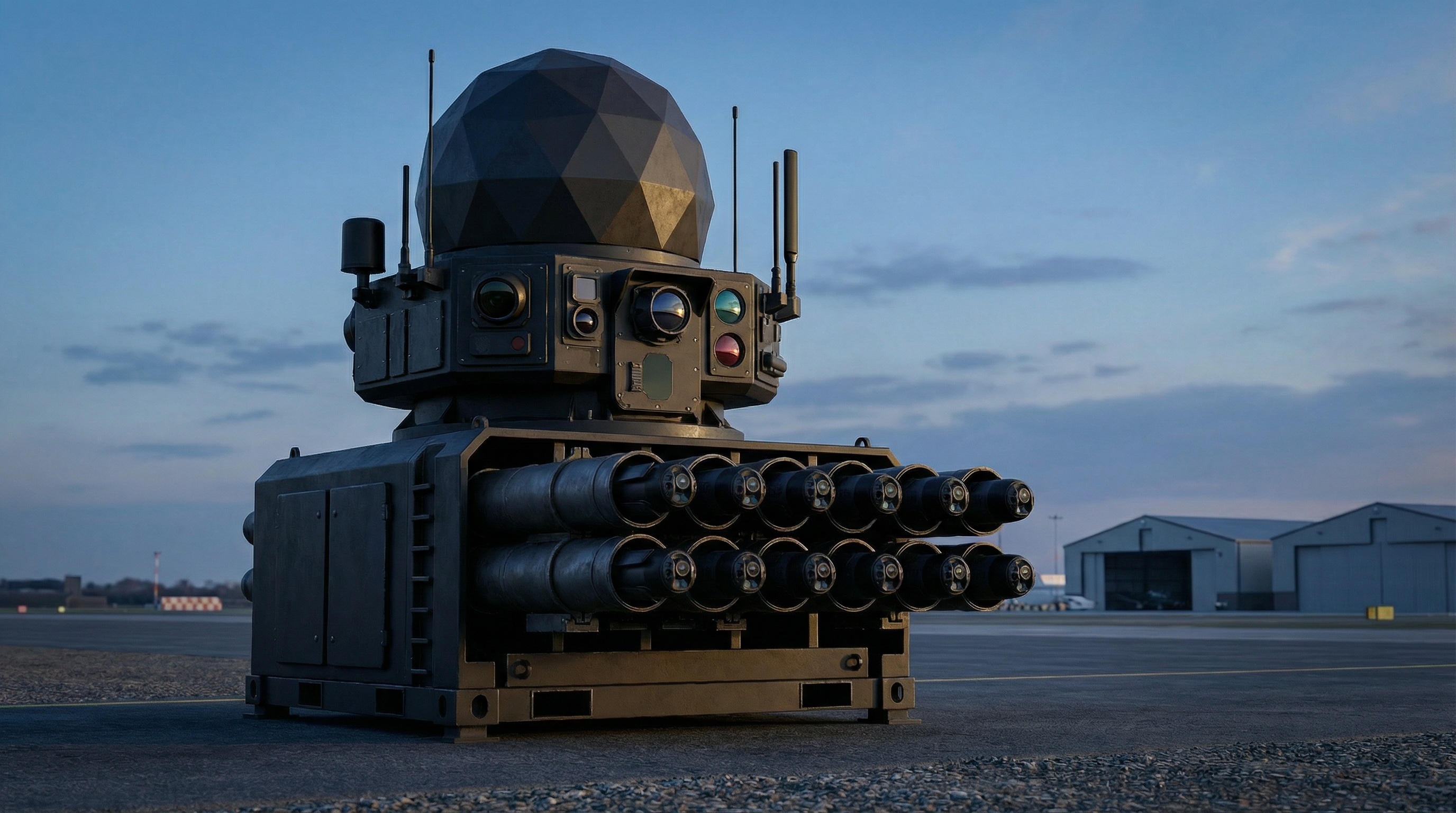
§ 02 · 01 — SENTINEL STATION
S/N 004 · 2026
Sentinel.
Multi-sensor fusion, neuromorphic edge compute, and a 12-cell pneumatic launcher — one node, the whole loop.
Legacy counter-UAS stitches together sensing, command, and effectors from disconnected vendors. We built the full kill chain into a single deployable architecture at the cost point defense economics actually require.
One Sentinel replaces a fragmented stack of five — sensing, tracking, C2, launch, and effectors — and closes the sense-to-decide loop at the edge. Fixed-site or vehicle-mounted. Stand up a protected perimeter in hours, not months.
Designed for comms-denied environments: every engagement decision is made on-node, in milliseconds, without a cloud round-trip.
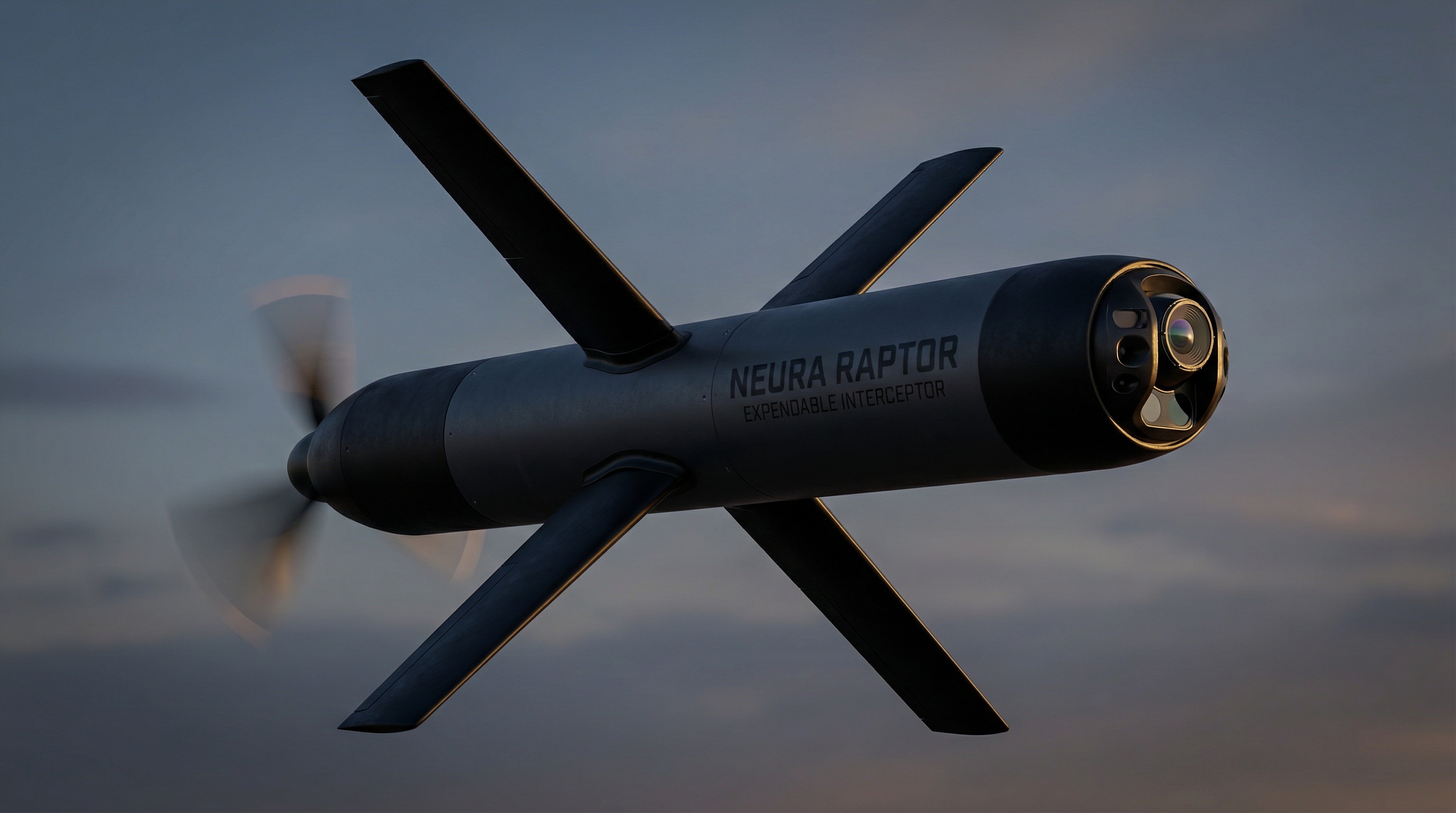
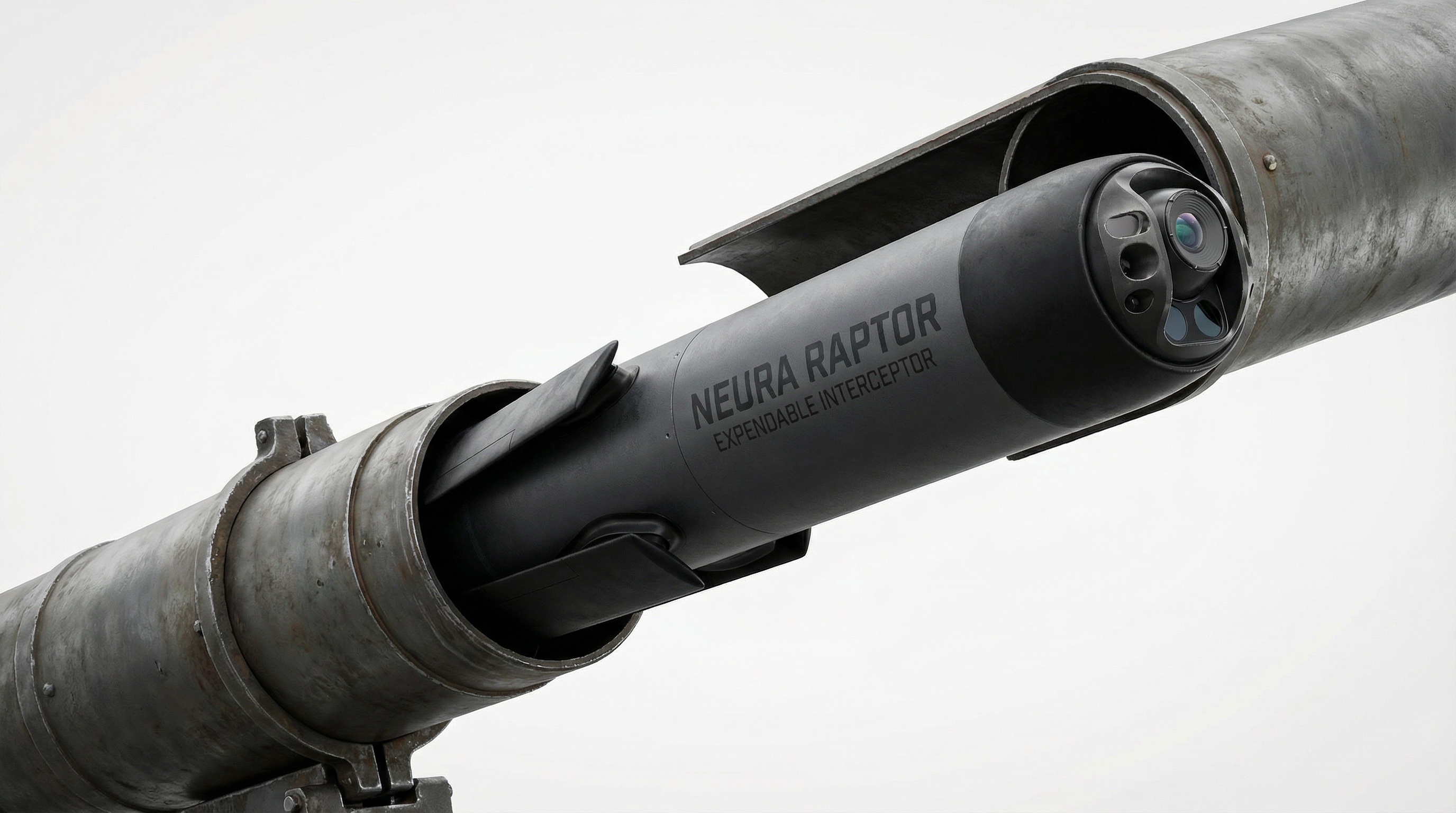
Wings, tail, and control surfaces stow inside a 110mm cell. Pneumatic eject, 40-foot unfold, electric pusher ignites post-deploy. The airframe is expendable by design — the launcher isn't.
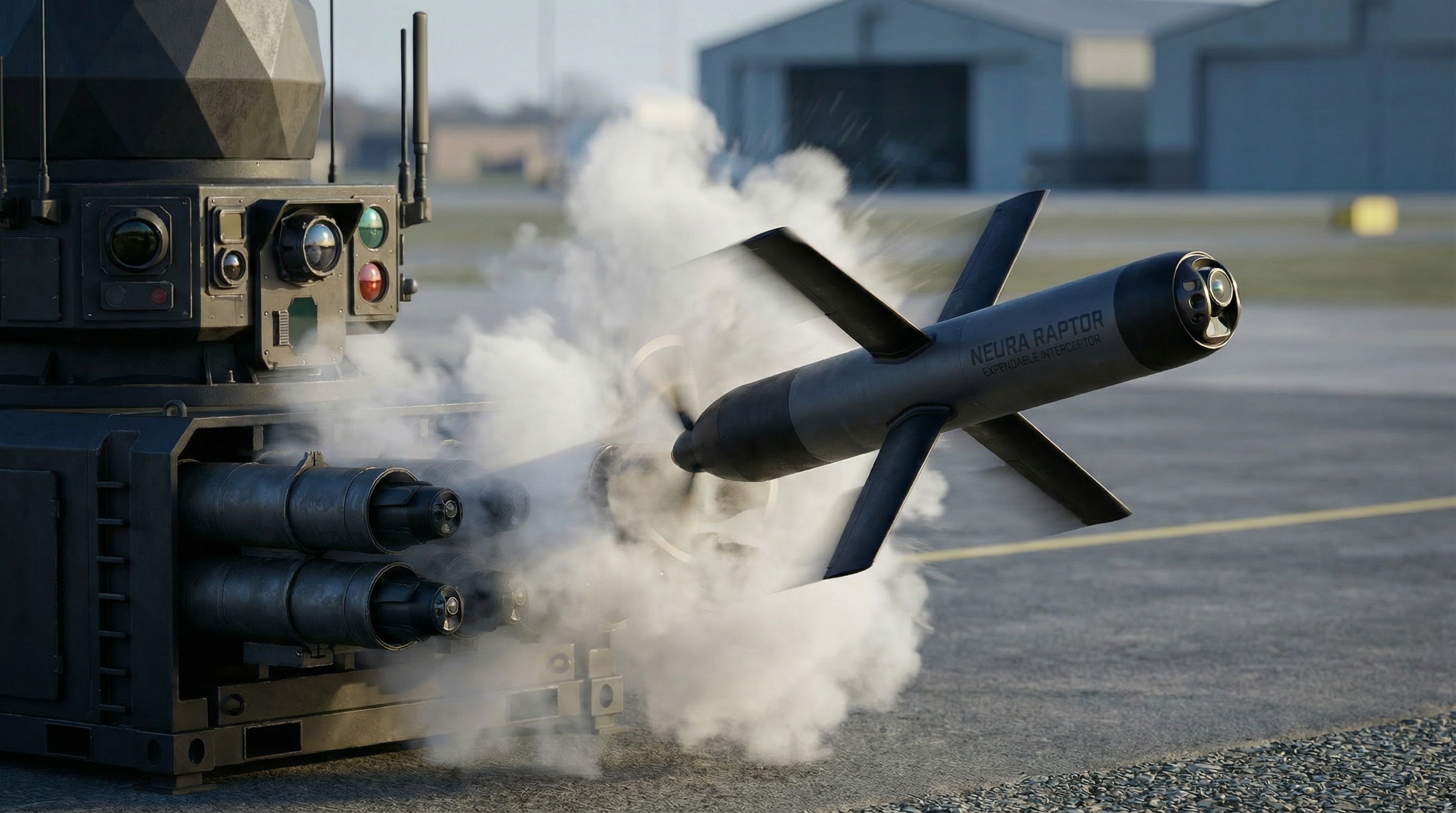
One integrated engagement loop. The Sentinel classifies the threat, allocates a tube, and the Raptor takes it from tube exit to impact — without a human in the hot path.
Multi-sensor fusion — RF, radar, EO/IR, acoustic — converges on one ground node. Target enters classification within milliseconds.
Neuromorphic compute at the edge — no cloud round-trip. Threat class assigned, tube allocated, ROE locked.
Pneumatic tube ejection. Raptor wings deploy on exit; electric pusher fires 40 feet out. Tube-to-motor-on in under two seconds.
Terminal AI tracks the airframe through evasion. Kinetic kill confirmed; Sentinel returns to the loop for the next inbound.
Side-by-side against the stacks Neura replaces. Cost, latency, swarm tolerance, software layer — every dimension that matters in a contested environment.
| Dimension | Legacy stack | Neura Defense |
|---|---|---|
| Interception cost | $100K–$3M+ per shot | ~$4,500 per Raptor |
| Reaction time | Minutes, fragmented stack | Seconds, integrated S→K chain |
| Swarm handling | Saturates quickly | Simultaneous multi-target AI logic |
| Engagement decision | Manual targeting loop | Autonomous within defined ROE |
| Infrastructure footprint | Disconnected sensor + weapon | Single Sentinel node: sense + launch |
| Software layer | Legacy, no update path | SaaS: detection, tracking, adaptation |
Multi-modal sensor fusion, neuromorphic compute, adversarial robustness, and the 8-patent portfolio that protects the full kill chain.